
telephone: 01285 425863 email: theteam@lexington.email







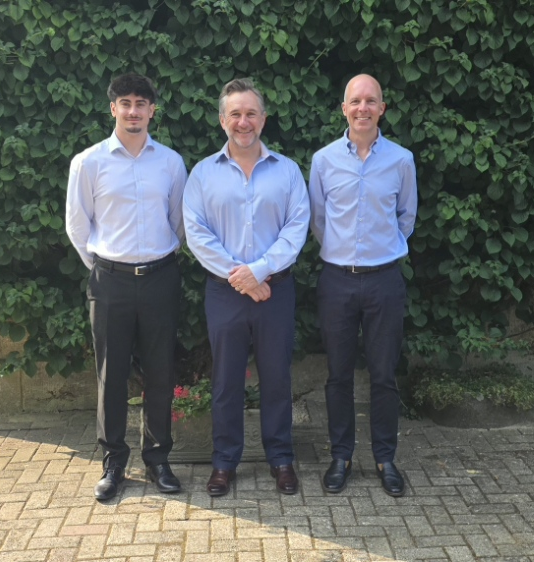
For Finley, financial planning appealed because it offered something university could not easily provide: the chance to get involved, learn from real people and begin building relationships straight away.
As he put it:
“I wanted to get the hands-on experience straight away and start making relationships with clients as soon as I leave education.”
That sentence says a lot. At 18, many young people are encouraged to follow a familiar path. Finish school. Go to university. Decide later. There is nothing wrong with that route, but it is not the only route.
Finley saw the value in learning by doing. His interest in finance began, as it does for many people, with his first job and his first experience of earning money.
“When I got my first job at 16, it led me to get interested in how you save, where you save, and what your savings can do for you.”
That curiosity grew at school, where he completed an Extended Project Qualification called ‘The cost of financial illiteracy’. In it, he explored the consequences of people not being taught enough about money and the wider impact that can have on families and society.
For anyone who knows Lexington, that will sound familiar. Financial education has always mattered to us. Warren has long believed that young people should leave school with a better understanding of money, choices and consequences. Finley’s route into the profession is a reminder that the next generation is not disinterested in financial planning. Very often, they simply have not been shown that it exists.
When they are shown, some of them see it for what it is: a career where you can make a difference.
James’s route to Lexington has been completely different. He arrived with life experience, professional experience and the confidence that comes from having already built a successful career. Yet he also arrived with the humility to start again. That takes courage.
When asked why he decided to change direction at 40, his answer was clear:
“I felt like I had got everything I could possibly get out of my previous career.”
That is a powerful moment in anyone’s life. Many people reach that point and stay where they are because it feels safer. James chose to pay attention to it. What drew him to financial planning was not simply the technical side of money. It was the role money plays in helping people shape their lives.
“If you don’t understand money compared to if you do understand money and what to do with it, your life’s just completely different.”
He had also looked at Lexington from the outside and recognised something important about our approach.
“It’s about more than just the products. It’s about what you do with your money. How do you want to live?”
That question sits at the heart of proper financial planning. Not: how much have you got? Not: what product do you need? But: how do you want to live?
The money matters, of course it does. But only because of what it allows you to do, protect, enjoy and pass on.
One of the most enjoyable parts of bringing Finley and James into the business at the same time has been watching them learn from each other.
James brings maturity, perspective and an ability to build rapport quickly. He understands people. He knows how important it is to help someone feel comfortable, listened to and respected. Finley has already noticed that.
“He’s very knowledgeable and professional. It’s really good just hearing him talk.”
That sort of learning is hard to manufacture in a classroom. You learn it by watching someone handle a conversation, ask a better question, slow down at the right moment or think about how a client might perceive something.
James, in turn, has found real value in working alongside someone at the very beginning of their career.
“It’s made me look through things with a different lens.”
That is the quiet strength of a good team. Different ages. Different backgrounds. Different perspectives. Shared standards.
Finley brings fresh thinking, comfort with technology and the perspective of someone who has grown up in a different world. James brings experience, judgement and the people skills that come from years of working with others.
Neither is more valuable than the other. Together, they make each other better.
For our clients, this is not just a nice internal story. It matters because the future of a financial planning firm should never depend on one person alone.
Great firms invest in continuity. They build teams. They pass on values, not just processes. They make sure that the next generation understands what clients have come to trust.
At Lexington, our clients often become clients for many years. Sometimes across generations. That brings a responsibility to think carefully about the future of the firm, the development of our people and the culture we want to preserve.
We are not trying to build the biggest financial planning firm. We are trying to build one of the best.
That means remaining personal, thoughtful and values-led. It means giving clients a professional service delivered in a friendly, approachable way. It means building long-term relationships through honest conversations, clear communication and a genuine desire to do the right thing.
It also means investing in people early and properly. Over the next few years, Finley and James will learn the technical side of financial planning. They will gain qualifications. They will sit in meetings, listen, ask questions, study, practise and grow.
But just as importantly, they will learn the Lexington way.
They will learn that financial planning is not about chasing the highest number on a statement. It is about helping people understand what they want from life and then organising their money to support it.
They will learn that trust is earned slowly. They will learn that listening well is often more valuable than talking cleverly. They will learn that clients do not just want advice. They want clarity, confidence and the feeling that someone is genuinely on their side.
Some people know what they want to do at 18. Some discover it at 40.
Some need a first career to teach them what they really value. Others are ready to begin much earlier than the traditional system expects.
The lesson for us is simple: talent does not arrive in one shape, age or stage of life.
Finley’s decision shows that financial planning can be an exciting and meaningful career for young people who want responsibility, purpose and real-world learning.
James’s decision shows that it is never too late to change direction when you know there is something more aligned with who you are and what you care about.
Both routes deserve respect. Both routes deserve opportunity. And both have something valuable to offer our clients, our team and our profession.
At its best, financial planning is deeply human work. It is about helping people make sense of their choices. It is about family, confidence, security, possibility and peace of mind. It is about asking better questions and helping people make decisions their future selves will thank them for.
That is why this apprenticeship programme means so much to us. Yes, it is about training two future financial planners. But it is also about something bigger.
It is about protecting the culture of Lexington. It is about investing in the next chapter of the profession. It is about showing that the right people, with the right values, can enter financial planning at different stages of life and thrive.
Finley and James may be twenty-two years apart. But they are both here for the same reason. They want to help people live better lives.
And for us, that feels very Lexington indeed.


