telephone: 01285 425863 email: theteam@lexington.email






From time to time, it benefits us to reflect on history so that we can be more prepared for the future.
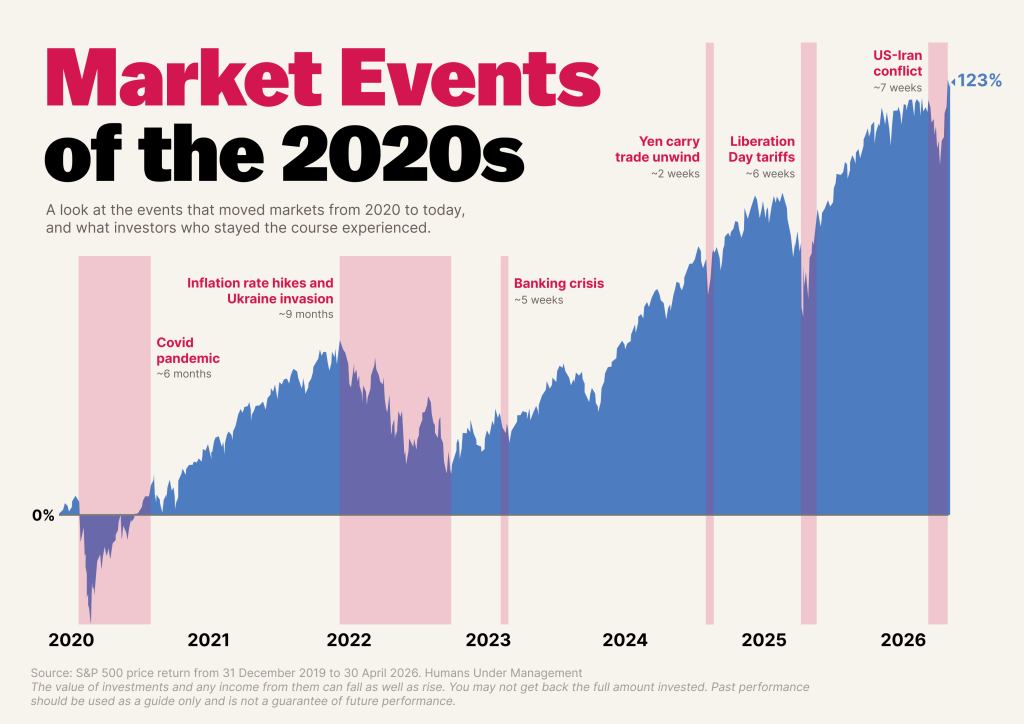
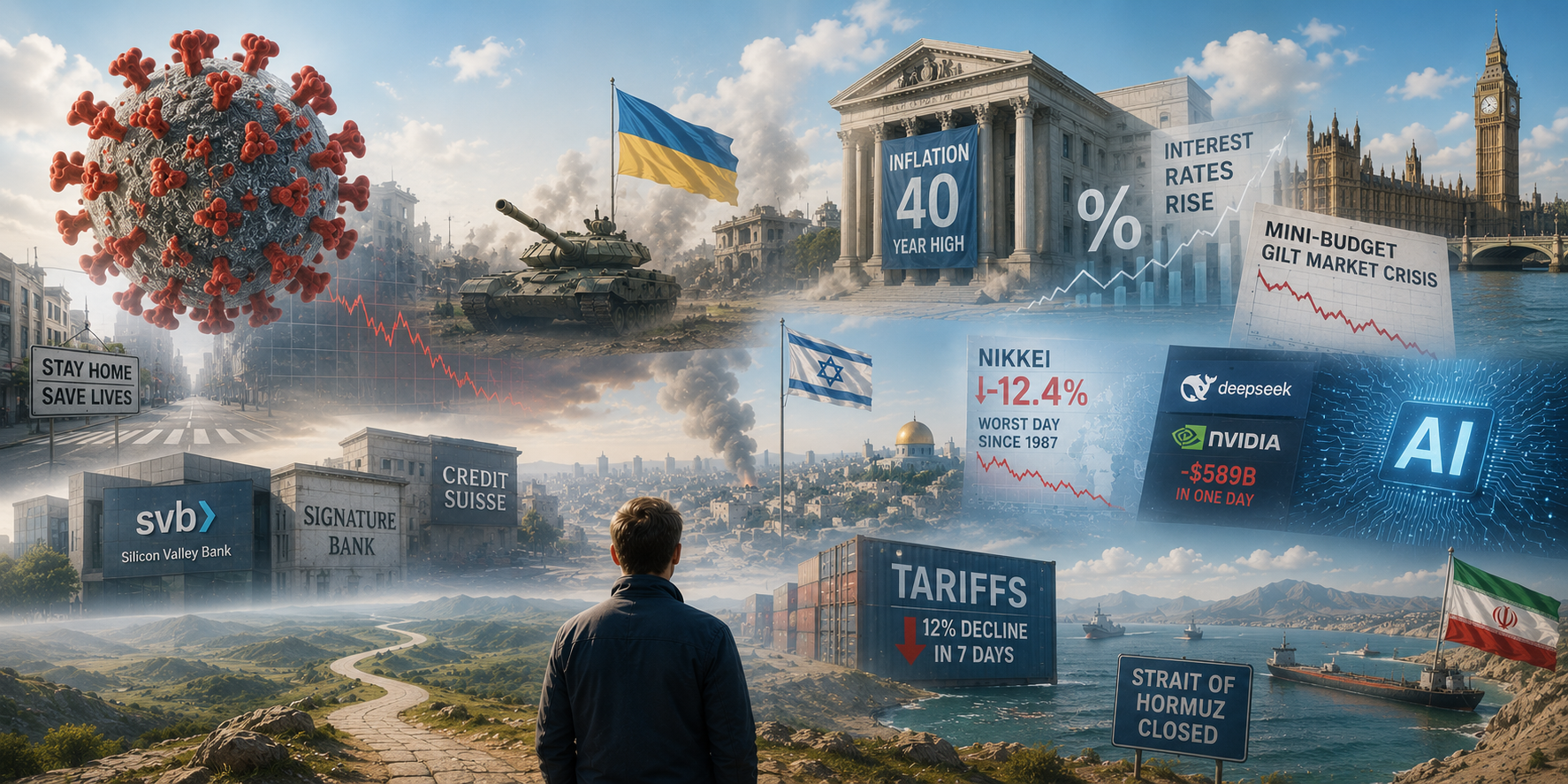
It’s now been six and a bit years since the start of 2020. In that time, investors have been through a lot. With markets currently calm, but having recently come through the US-Iran chaos that isn’t quite finished, this is a good moment to look back at what we’ve actually faced, and what those experiences can teach us.
We tend to think of major market events as something that happens every few years, with mostly quiet stretches in between. The recent past has been busier. We can’t predict whether the next six years will look the same, but what we’ve lived through over the past six years is worth a deliberate look.
At the end of 2019, just before any of this began, the S&P 500 (often used as a benchmark for the global equity market) closed at around 3,231. At the end of April 2026, it sits at 7,209, having recently passed 7,000 for the first time. That’s a gain of 123% over six years.
In 2019, the companies that make up the S&P 500 collectively earned around $139 per share. In 2025, they earned around $253 per share. The businesses you own through a diversified portfolio are earning substantially more than they were six years ago, despite living through everything on the list above.
How many of these events were you losing sleep over at the time? None of these worries were wrong. The events were serious, and being concerned about the world is a normal response. However, hindsight gives us a perspective we couldn’t have at the time.
It shows that short-term feelings and long-term meaning often operate on different time scales. For many long-term investors, the risk of missing a recovery can be as significant as the discomfort of a decline.
Staying informed about the world matters. The challenge for a long-term investor is not letting that information derail your plan. The two can pull in opposite directions, particularly when the headlines are loud.
If you’ve remained invested through these six years, in line with your long-term plan, you’ve learned lessons that will strengthen your resolve if the rest of the decade brings similar uncertainty.
The smart investor’s challenge is to internalise the lessons and be prepared for the next test. That’s how you learn the art of investing.